Lying awake, overthinking
Thoughts that go round and round, even though there’s nothing left you can do.
The private journal of the Stoic emperor
Nearly 1,900 years ago, the most powerful man in the world sat in an army camp at night and wrote notes to himself about calm, duty, and inner freedom. This modern translation makes his Meditations read as if they were written today.

You must stand firm like a cliff against which the waves constantly crash.
Why now
Headlines every few minutes. Pressure at work. People who get on your nerves. Worries about things you can’t change. Marcus Aurelius knew all of this. As ruler of a vast empire, he faced war, plague, and betrayal. His answer wasn’t to run away. It was a mindset: Stoic calm.
The Stoics had tried-and-true mental tools for exactly these problems. Marcus Aurelius wrote them down for himself.
Thoughts that go round and round, even though there’s nothing left you can do.
Someone pushes your buttons, and you let it ruin your whole day.
Busy all day, but getting nowhere. By evening, you can’t say you did what really mattered.
Worries about tomorrow that drain the strength you need for today.
What you’ll take away
Meditations isn’t a dry textbook. It’s the private training journal of a man who wanted to become a little better every day. And that’s exactly how you can read it.
Learn to retreat into yourself whenever you need to. No vacation, no quiet hideaway required.
“Whenever you wish, you have the power to retreat into yourself and find peace, free from all concerns.”
Book IV, 3
Separate what’s in your control from what isn’t. It’s the heart of Stoic philosophy.
“External things that impact us remain outside our control, devoid of understanding or the ability to communicate about themselves. It is the mind that forms judgments about these things.”
Book IX, 13
Criticism, setbacks, chaos. The waves keep crashing, but you stand firm.
“You must stand firm like a cliff against which the waves constantly crash.”
Book IV, 40
The emperor’s famous morning exercise for overcoming procrastination and the pull of comfort.
“When you feel reluctant to rise in the morning, remind yourself that you are waking to do the work of a human being.”
Book V, 1
Why the best response to being wronged is not to become like the person who wronged you.
“The most effective form of revenge is not to become akin to the offenders.”
Book VI, 5
Memento mori: once you see that your time is limited, you stop wasting it.
“Approach all your endeavors and plans as if you might depart from life right now.”
Book II, 8
Marcus Aurelius quotes
Every quote comes straight from this translation.
Your mind is shaped by your recurrent thoughts and meditations. The soul, like a cloth, absorbs the colors of its thoughts.
Why this edition
Looking for the best translation of Meditations? Many English editions still read like the 19th century: “thee” and “thou,” long Victorian sentences, and outdated words that make you work for every page. This translation stays close to the meaning of the original and speaks directly to you.

Sample
Two passages from the translation, quoted word for word and only shortened.
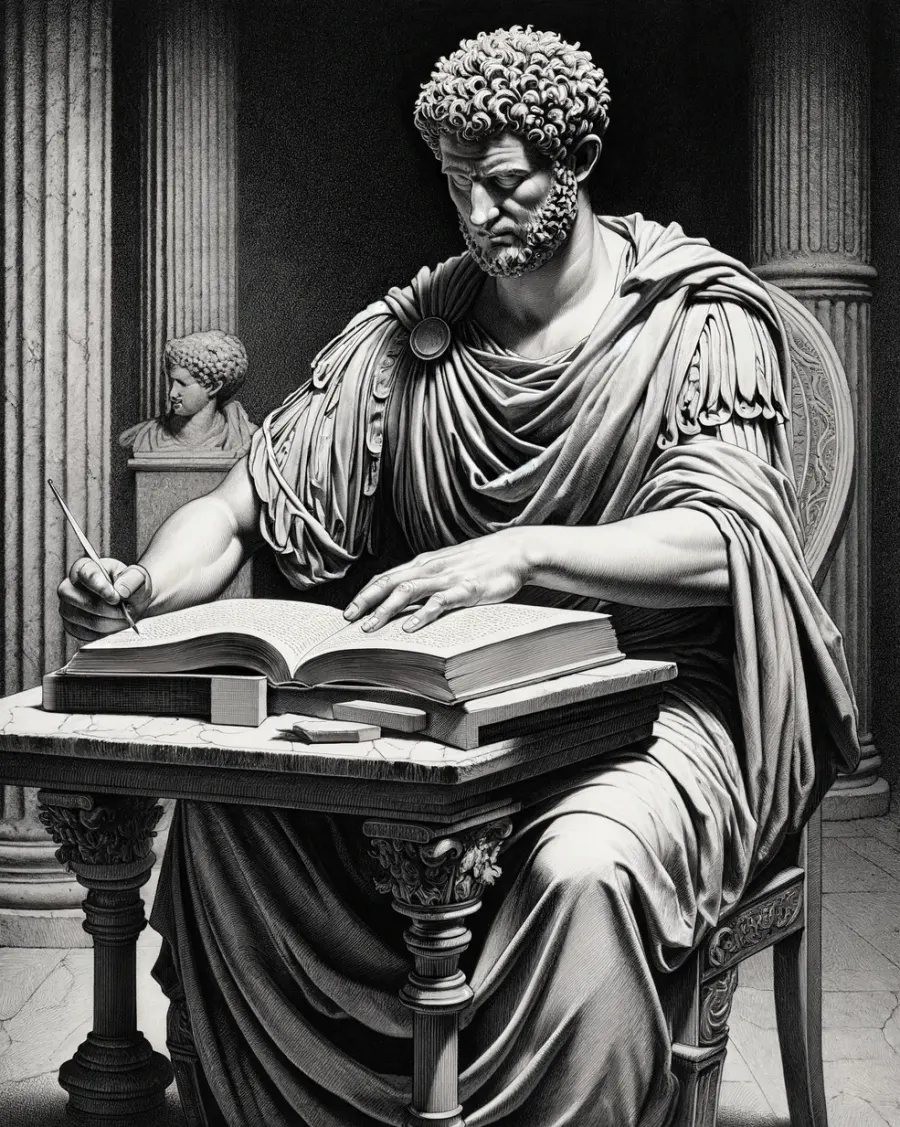
Meditations · Book IV, 3
People often seek solitude in the countryside, by the sea, or in the mountains. You, too, have longed for such retreats. Yet, realize this desire stems from a fundamental simplicity. Whenever you wish, you have the power to retreat into yourself and find peace, free from all concerns. There is no better refuge than your own soul, particularly when it contains inner resources that, upon introspection, provide immediate tranquility and order, free from confusion and disturbance. Continuously allow yourself this retreat to rejuvenate and revitalize. Keep these principles concise and foundational, quickly bringing them to mind to cleanse your soul and return content to your external surroundings. What troubles you? Is it the wrongdoing of others? […]
Meditations · Book V, 1
When you feel reluctant to rise in the morning, remind yourself that you are waking to do the work of a human being. Why then feel resistant to doing what you were born for? Were you created just to lie in bed and indulge yourself? ‘But it’s comfortable,’ you might say. Remember, were you born for mere pleasure? Rather, weren’t you meant to be active and engaged? Look at nature: trees, plants, birds like sparrows, creatures like ants, spiders, bees - each performs its role, contributing to the harmony of the universe. They are all active, fulfilling their natural purpose. Why then should you, a human being, not do what is in your nature? ‘But rest is necessary,’ you might argue. […]
The philosopher-emperor
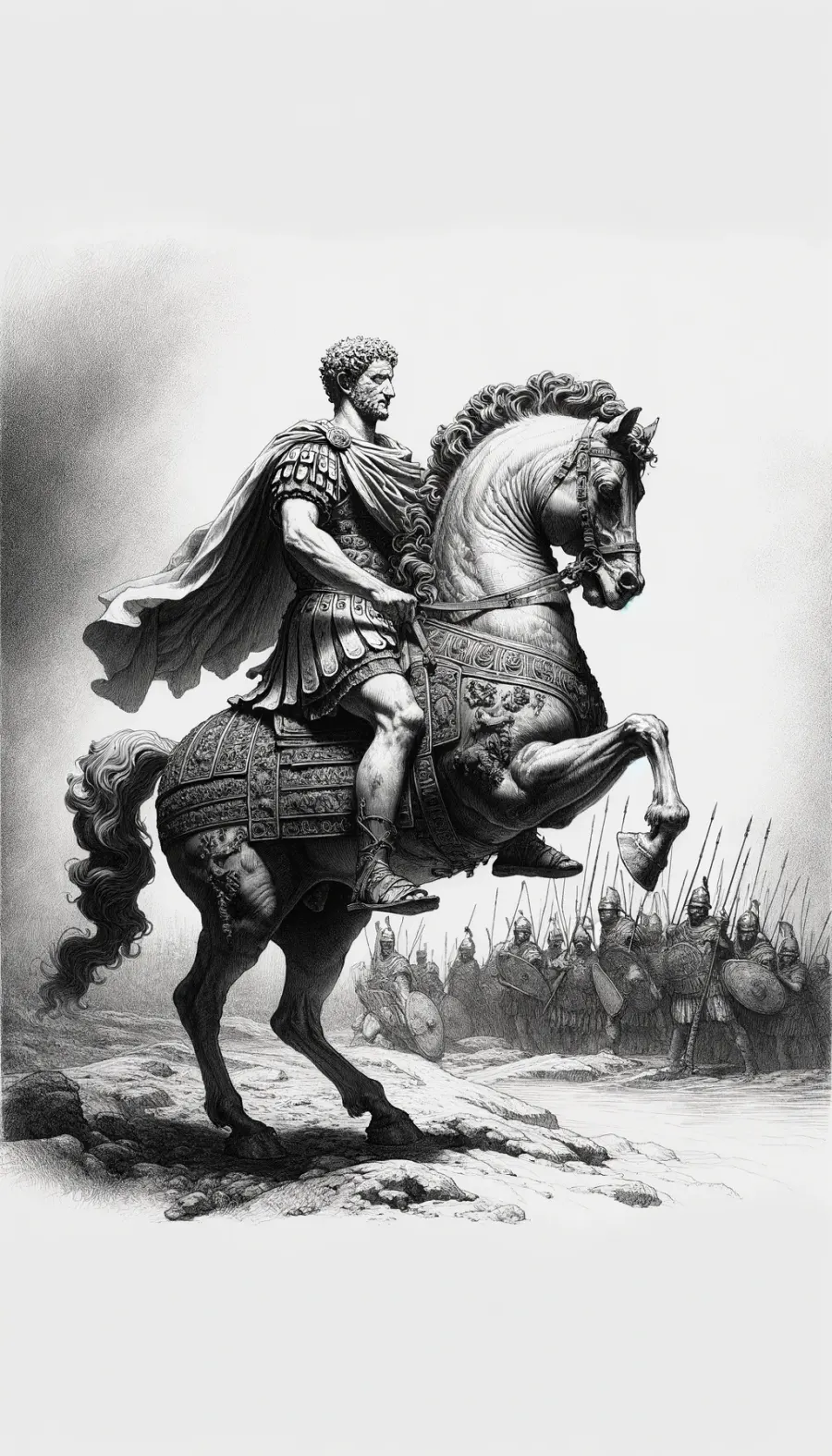
Marcus Aurelius (AD 121–180) was Roman emperor from 161 to 180 and is considered the last of the “Five Good Emperors.” Even as a teenager, he was drawn to Stoicism, the philosophy of Zeno, Seneca, and Epictetus.
His reign was anything but peaceful. The Antonine Plague swept through the empire, and for years he waged war against the Marcomanni and Quadi along the Danube. It was there, in tents and army camps, that he wrote down his thoughts, not for an audience but for himself. The Greek title is Ta eis heauton, “To Himself.” In English, the work is known as Meditations, or The Meditations.
Today, Meditations is one of the most widely read books in all of philosophy. Entrepreneurs, athletes, and psychologists cite it, and many people know the emperor from the movie “Gladiator.”
Stoicism for beginners: the 60-second version
Your judgments, decisions, and actions belong to you. Everything else, you take in stride.
It’s our opinions about them. Change your judgment, and your anger loses its power.
Life is short. Do the right thing today, with your full attention, instead of brooding over tomorrow.
Reader reviews
Praises the new translation as inspiring: clear, accessible language and ideas that can be applied directly in everyday life. Calls it a companion for a meaningful, resilient life.
Emphasizes that the translation stays faithful to the original while remaining easy to understand, making Stoic concepts accessible. Also describes the illustrations as carefully crafted.
Describes the book as a modern gem that turns classical wisdom into practical tools: clear, profound, and helpful for finding inner peace in a distracted world. Highly recommends it.
Wanted to learn more about Stoicism and says this book delivered exactly that: just what they had been looking for.
Summarized in our own words from genuine 5-star reviews on Amazon. You can read the original reviews on each product page.
Read all reviews on Amazon →Choose your format
Every edition contains the complete text. You’ll find current prices and delivery times right on Amazon.
Start reading instantly on your Kindle, phone, or tablet. Perfect for your commute.
See the Kindle edition
Easy to carry and made for underlining and jotting notes in the margins. The everyday classic.
See the paperback
The premium edition for your bookshelf, and a gift that means something.
See the hardcoverTip: Meditations makes a timeless gift for anyone going through a hard time.
Also available in: Deutsch (amazon.de) Français (amazon.fr) Italiano (amazon.it) Español (amazon.es)
There isn’t one: it’s the same work. Marcus Aurelius wrote in Greek, and it has come down to us under the title Ta eis heauton (“To Himself”), which some older English editions also used. Today the book is best known in English as “Meditations.”
Yes. Its modern language makes this edition an easy way into Stoic philosophy. You don’t need any prior knowledge; the introduction gives you the background.
Yes. All 12 books of Meditations are included in full, along with an introduction to the life and times of Marcus Aurelius.
Older translations often use 19th-century English. This edition puts the emperor’s thoughts into clear, present-day English and speaks directly to you, while staying close to the meaning of the original.
Kindle eBook, paperback, and hardcover, all on Amazon.
Yes. Ken Murphy’s translation is available in English, German, French, Italian, and Spanish.
Not all at once. Many readers pick a few passages in the morning or evening and reflect on them, just as Marcus Aurelius did. You’ll find free exercises to go with it on PureMindBlog.
Your next step
Marcus Aurelius had an empire to run, and he still made time for these thoughts every day. A few pages a day is all it takes.
See Meditations on AmazonApproach all your endeavors and plans as if you might depart from life right now.
Marcus Aurelius · Book II, 8